
Introduction
Understanding the arm muscles, what they are, what each one does, and how to train them effectively, makes it much easier to build a balanced, effective arm workout rather than just doing curls and calling it a day. This article breaks down the main muscle groups in the arm, their function, and the most effective exercises for developing each one.
The Biceps Brachii
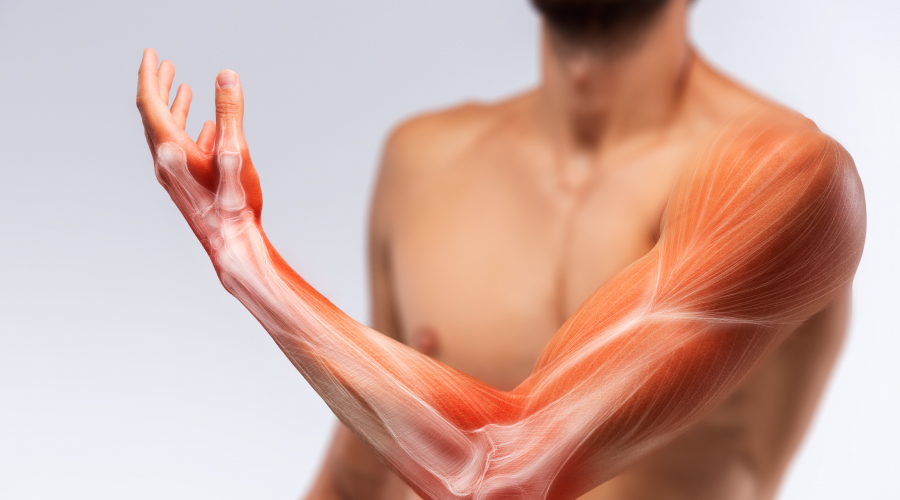
The biceps brachii, commonly just called the biceps, is a two-headed muscle on the front of the upper arm, primarily responsible for elbow flexion (bending the arm) and forearm supination (rotating the palm to face upward). The two heads, the long head and short head, contribute slightly different shapes to the muscle, which is part of why varying grip width and arm position across different curl variations can shift emphasis between them. Effective biceps exercises include standard barbell or dumbbell curls, hammer curls (which also engage the brachialis), and incline dumbbell curls, which place the biceps in a stretched position for a different training stimulus.
The Triceps Brachii
The triceps brachii, on the back of the upper arm, is actually larger than the biceps and consists of three heads: the long, lateral, and medial heads. The triceps is responsible for elbow extension (straightening the arm), and because it makes up roughly two-thirds of upper arm mass, it’s often more impactful for overall arm size than biceps training alone. Effective triceps exercises include close-grip bench press, tricep pushdowns, overhead tricep extensions (which specifically emphasize the long head due to its stretched position), and dips.
The Brachialis
Often overlooked, the brachialis sits underneath the biceps and, despite being less visible, plays a significant role in elbow flexion strength and can meaningfully contribute to overall arm thickness when well developed, since it pushes the biceps outward and upward. Hammer curls and reverse curls, both performed with a neutral or overhand grip rather than the underhand grip of a standard curl, specifically target the brachialis more than standard bicep curls do.
The Forearm Muscles
The forearm contains a complex group of muscles responsible for wrist flexion, wrist extension, and grip strength, broadly divided into flexor muscles (on the palm-facing side, responsible for gripping and wrist flexion) and extensor muscles (on the back of the forearm, responsible for wrist extension). Effective forearm exercises include wrist curls and reverse wrist curls for targeted development, alongside farmer’s carries and dead hangs, which build functional grip strength through isometric loading rather than isolated movement.
Building a Balanced Arm Training Routine
A well-rounded arm workout addresses biceps, triceps, and forearms rather than focusing disproportionately on biceps, which is a common beginner mistake given how visible bicep curls feel in the mirror. A reasonable structure might include 2-3 biceps exercises, 2-3 triceps exercises, and dedicated forearm work at least once or twice weekly, with attention to the fact that triceps, given their larger mass, often deserve at least equal if not slightly more training volume than biceps for overall arm development.
How Compound Exercises Contribute to Arm Development
It’s worth noting that arm muscles receive significant indirect training from compound upper body exercises even without dedicated isolation work. Pull-ups and rows heavily engage the biceps and brachialis, while bench press and overhead press significantly engage the triceps. This means a well-rounded upper body program built around compound movements already provides meaningful arm training, with isolation exercises serving to add extra targeted volume rather than being the sole driver of arm development.
Training Frequency and Recovery
Arm muscles, like other muscle groups, generally respond well to being trained 2-3 times per week with adequate recovery between sessions, since they’re relatively small muscle groups that recover somewhat faster than larger muscle groups like the back or legs. That said, since biceps and triceps are also heavily engaged during other upper body compound exercises, total weekly volume across both dedicated arm work and compound movements should be considered together to avoid overtraining and inadequate recovery.
Common Mistakes in Arm Training
A few common mistakes limit arm development: using momentum or body swing during curls rather than controlled, strict form, which reduces the actual muscle tension achieved; neglecting the triceps despite their larger contribution to overall arm size; and skipping forearm-specific work entirely, even though grip strength and forearm development support performance across many other exercises, from deadlifts to pull-ups.
Conclusion
Understanding the distinct roles of the biceps, triceps, brachialis, and forearm muscles makes it possible to build a genuinely balanced arm training routine rather than one dominated by curls alone. Combining targeted isolation work for each muscle group with the substantial indirect arm training already provided by compound upper body exercises produces more complete, functional arm development over time.