
Introduction
The forearm is one of the most functionally important, yet frequently neglected, muscle groups in strength training, playing a direct role in grip strength that affects performance across nearly every pulling and carrying exercise. This article covers forearm anatomy, the most effective exercises for developing forearm strength and size, and why dedicated forearm training is worth prioritizing even if it’s not the most visually dramatic muscle group.
Understanding Forearm Anatomy
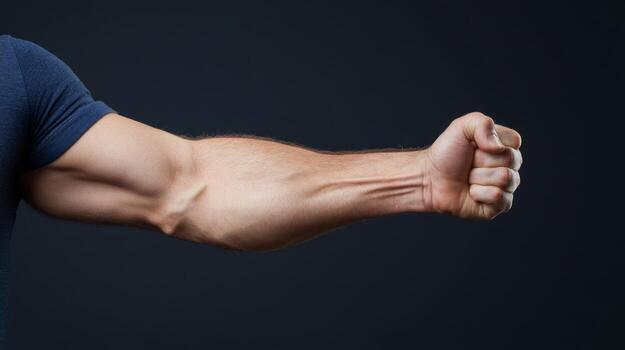
The forearm contains a dense group of muscles broadly divided into two categories: the flexor muscles, located on the palm-facing (anterior) side of the forearm, which control wrist flexion and finger gripping, and the extensor muscles, located on the back (posterior) side, which control wrist extension and finger opening. This muscular density, combined with the forearm’s relatively small circumference compared to muscle groups like the biceps, is part of why forearm development can be more visually noticeable per unit of muscle growth than some other body parts.
Why Grip Strength Matters Beyond Aesthetics
Grip strength isn’t just relevant for forearm appearance; it’s a genuinely important functional and even health-related marker. Research has linked grip strength to overall functional capacity and, notably, some studies have found associations between grip strength and broader health and longevity markers in older adults, making it a metric worth caring about beyond pure aesthetics or a niche training goal. In practical training terms, weak grip strength can become the limiting factor in exercises like deadlifts and pull-ups well before the target muscle group (back, glutes, hamstrings) reaches its own fatigue limit.
Wrist Curls and Reverse Wrist Curls
Wrist curls, performed by resting your forearm on a bench with your wrist hanging off the edge and curling a weight upward using only wrist movement, directly target the flexor muscles. Reverse wrist curls, performed the same way but with palms facing down, target the extensor muscles on the back of the forearm. Since the extensors are often comparatively weaker and more neglected than the flexors, prioritizing reverse wrist curls specifically can help correct this common imbalance.
Farmer’s Carries
Farmer’s carries, walking for distance or time while holding a heavy weight in each hand, are one of the most effective functional forearm and grip exercises available, since they train grip strength isometrically under load for an extended duration, closely mirroring how grip strength is actually used in daily life and other lifts. This exercise also provides genuine core and full-body stability benefits alongside forearm development, making it an efficient addition to a training routine beyond pure forearm isolation.
Dead Hangs and Grip Endurance Work
Simply hanging from a pull-up bar for time, known as a dead hang, is a deceptively simple but genuinely effective grip and forearm exercise, particularly useful for building the kind of grip endurance needed for higher-rep pull-up sets or extended climbing or carrying activities. Progressive dead hang training, gradually increasing hang time over weeks, is also commonly used as a low-impact way to improve shoulder mobility and decompress the spine, offering benefits beyond forearm training alone.
Using Grip Tools and Accessories
Beyond bodyweight and free weight exercises, dedicated grip training tools like hand grippers, grip strengtheners, and thick-handled implements (or thick grip attachments added to standard barbells and dumbbells) can add targeted forearm and grip stimulus. Thick-grip training in particular forces significantly more forearm engagement than standard bar diameters, since the hand has to work harder to maintain grip around a larger circumference.
How Forearm Training Fits Into a Broader Routine
Because forearms are heavily engaged as secondary muscles during pulling exercises like rows, pull-ups, and deadlifts, and to a lesser extent during pressing exercises requiring a firm grip, dedicated forearm work doesn’t necessarily need to be extensive or high-frequency to see meaningful results. Two focused forearm sessions weekly, combining a couple of direct exercises like wrist curls with functional work like farmer’s carries or dead hangs, is generally sufficient for most training goals when combined with the indirect forearm work already happening during other compound lifts.
Common Mistakes in Forearm Training
A common mistake is neglecting forearm training entirely, assuming it will develop sufficiently through indirect engagement during other lifts alone, which often leaves grip strength as a limiting bottleneck in bigger compound lifts over time. Another common mistake is overtraining the flexors while neglecting the extensors, which can contribute to muscular imbalance and, in some cases, contribute to overuse issues like tennis elbow-type discomfort if the imbalance becomes significant.
Conclusion
Forearm training deserves more attention than it typically gets, given grip strength’s direct impact on performance across nearly every major pulling exercise and its broader association with functional capacity. Combining direct exercises like wrist curls and reverse wrist curls with functional grip work like farmer’s carries and dead hangs builds well-rounded forearm strength that supports both appearance goals and performance across the rest of a training program.