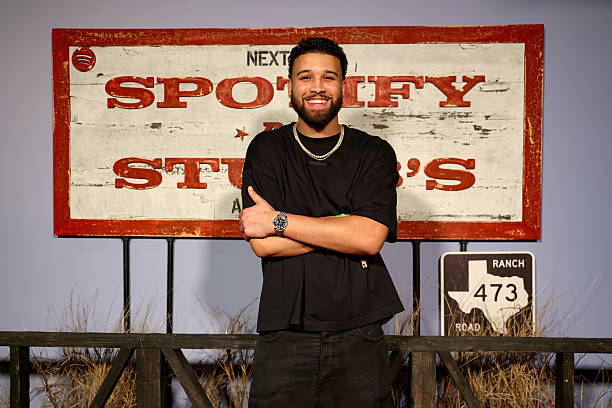
Peyton Hardin has built a genuinely substantial following as the host and founder of the You Should Know Podcast, alongside a significant presence on TikTok and Instagram that has made him a recognisable figure in the podcast and creator space. As his platform has grown, so has public curiosity about his actual earnings — a question that turns out to be considerably harder to answer with precision than the confident-sounding figures circulating online might suggest.
Hardin, born on February 16, 1999, built his platform through a combination of podcast hosting and short-form social content, with his TikTok account amassing well over three million followers through a mix of podcast clips and standalone content. Before his media career, he attended Seminole State College, where he played college basketball, a background he has referenced as part of his personal story on the podcast itself.
The You Should Know Podcast, which Hardin founded and hosts alongside co-host Cameron Kennedy, has grown a genuine following through interviews spanning athletes, entertainers, and other public figures, combined with a growing live touring presence that has taken the show to theatre-sized venues. This combination of a strong digital audience and an active touring schedule represents one of the more sustainable models in the current podcast landscape, since it diversifies income across advertising, ticket sales, and direct fan engagement rather than relying on any single revenue stream.
When it comes to the specific net worth figure, the honest answer is that no verified, official figure has been publicly disclosed by Hardin himself. Different sites estimating his wealth arrive at meaningfully different numbers — some suggesting a specific figure around $5.5 million, others describing a broader range in the low-to-mid seven figures, and still others stating plainly that no reliable figure is publicly available at all. This spread is typical for creator-economy figures generally, where actual income depends on details — sponsorship rates, touring revenue, merchandise sales — that are rarely disclosed publicly and are instead estimated by outside observers using general industry benchmarks.
Understanding how these estimates are typically constructed helps explain why they vary so much. Sites estimating a creator’s net worth generally work from publicly visible signals — follower counts, engagement rates, typical brand deal pricing for accounts of similar size, and observable business activity like touring or merchandise lines — then apply general creator-economy formulas to arrive at a plausible range. This approach can produce a reasonable ballpark, but it is fundamentally an estimate built on outside assumptions rather than a verified figure sourced from actual financial records or direct disclosure.
Podcast monetisation specifically involves several distinct revenue streams that outside estimates have to account for. Advertising revenue from sponsors, typically priced on a cost-per-thousand-listens basis, forms one component, while direct brand partnerships negotiated outside standard ad inventory can command considerably higher rates for a host with Hardin’s level of engagement. Touring adds a further layer, since selling out theatre-sized venues across multiple cities represents meaningful additional revenue beyond digital advertising alone, though this income also carries higher associated costs — venue fees, travel, and production expenses — that pure digital content does not.
Social media presence itself represents another meaningful, if harder to precisely estimate, income stream. Accounts with several hundred thousand engaged followers, as Hardin’s Instagram presence reflects, typically attract consistent brand partnership interest, with individual sponsored posts or campaigns commanding rates that scale with both follower count and, importantly, actual engagement rate rather than follower count alone.
For readers genuinely interested in Hardin’s career rather than a specific dollar figure, his actual, verifiable achievements — building a podcast with genuine reach, developing a successful live touring model, and growing a multi-platform social presence from a standing start — arguably tell a more complete and reliable story than any net worth estimate could. These accomplishments are directly observable, unlike a specific wealth figure that remains, by his own choice, undisclosed.
As with most public figures who have not released detailed financial information, any net worth figure attached to Peyton Hardin should be read as an informed outside estimate rather than a confirmed fact — useful as a general sense of scale, but not something to treat as precisely accurate.
What is genuinely verifiable, and arguably more useful to anyone researching his career, is the trajectory itself: a college athlete who pivoted into podcasting, built a genuine multi-platform audience, and expanded into live touring within a relatively short span of time. That trajectory, rather than any specific dollar figure, is what makes his career worth paying attention to for anyone interested in how modern independent media careers actually get built.
It’s also worth noting how quickly this kind of career path has become viable compared to a decade ago, when building a media career largely required either traditional broadcast connections or a much longer, slower path to audience building. Hardin’s trajectory reflects a genuinely newer model, where a creator can move from college sports to a self-built media brand within a handful of years, powered primarily by direct audience engagement rather than traditional media gatekeepers.