
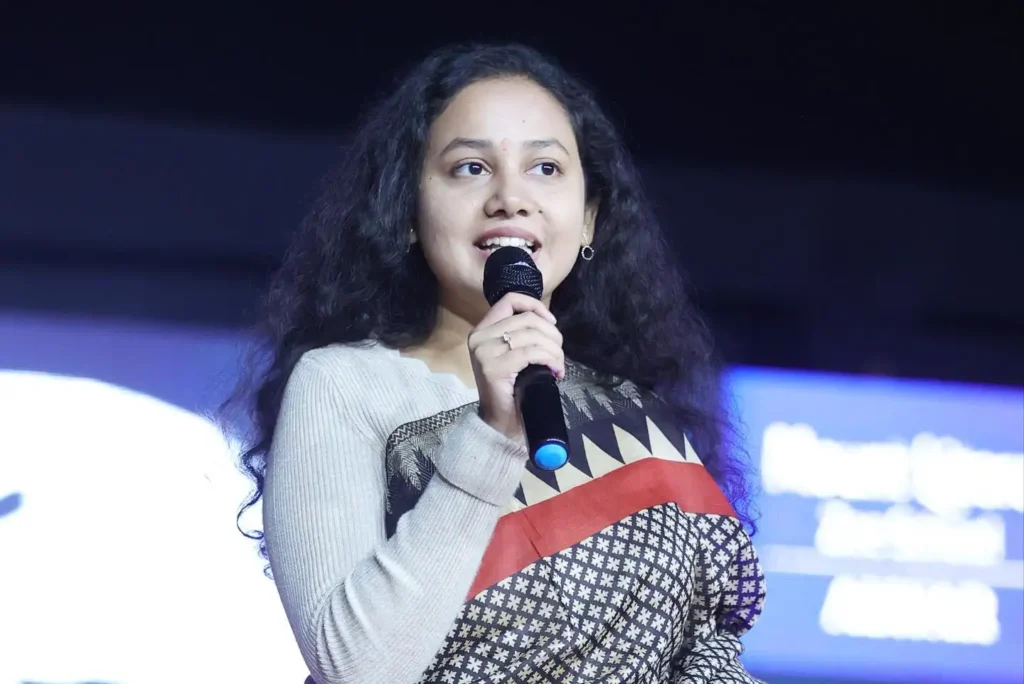
Ria Dabi has built a genuinely notable career of her own within the Indian Administrative Service, though much of the public’s initial interest in her stemmed from her family connection to Tina Dabi, who famously topped the UPSC Civil Services Examination in 2015 with All India Rank 1. Understanding Ria’s own career trajectory, separate from that initial framing, gives a clearer picture of what has become an independently accomplished path within India’s civil services.
Ria Dabi secured All India Rank 15 in the UPSC Civil Services Examination of 2020, clearing the notoriously difficult exam on her first attempt — a genuinely significant achievement given how few candidates succeed even after multiple attempts. This result placed her among the top-ranked candidates in that year’s exam cycle, allotting her to the Indian Administrative Service with the Rajasthan cadre, the same state where her elder sister Tina Dabi has also built her career.
Family background plays a meaningful role in understanding Ria’s path into civil services. Her father, Jaswant Dabi, worked in a government role connected to India’s telecommunications sector, while her mother, Himani Dabi, previously served in the Indian Engineering Services before stepping back from that career. This kind of family exposure to public service and government administration is frequently cited by both Dabi sisters as a meaningful early influence on their eventual career choices, though Ria has been clear that her own UPSC preparation and result reflect her own individual effort and dedication rather than being handed to her through family connections.
Ria’s education included a degree in Political Science from Lady Shri Ram College for Women, part of Delhi University — a background that provided relevant grounding for the kind of governance, policy, and public administration knowledge the UPSC exam and subsequent IAS career both demand. This academic foundation, combined with her own dedicated preparation, culminated in her strong UPSC 2020 result.
On the personal side, Ria Dabi married Manish Kumar, an IPS officer from the same 2021 training batch, in 2023. The two reportedly met during their shared training period at the Lal Bahadur Shastri National Academy of Administration in Mussoorie, where officer trainees across the IAS, IPS, and other civil services undergo joint foundational training — a setting where a number of civil service marriages have historically originated, given the close, sustained interaction among trainees during this period.
Career progression is where Ria Dabi’s own individual trajectory has drawn particular attention in recent reporting, with some coverage noting that her promotion from the junior to the senior administrative scale came notably faster than the pace her sister Tina experienced earlier in her own career. She has served in field postings within the Rajasthan cadre, including work connected to district-level administration, reflecting the kind of grassroots governance experience that forms a core part of early IAS career development.
It is worth noting that publicly available details about Ria Dabi’s exact date of birth and birthplace vary somewhat across different published sources, with some citing Bhopal and others citing Ajmer as her birthplace, and with reported birth years and exact dates also showing inconsistency across different articles covering her. Given this variation across sources, her precise age is not pinned down here with confidence; what remains consistently and reliably reported across sources is her UPSC 2020 result, her Rajasthan cadre posting, and her family and marital background as described above.
Beyond the specific factual details of her career, Ria Dabi’s visibility reflects a broader pattern of genuine public interest in India’s UPSC toppers and civil servants more generally, particularly younger officers who successfully clear one of the world’s most competitive examinations relatively early in their professional lives. This interest has helped make both Dabi sisters recognisable figures well beyond typical civil service circles, with their journeys frequently referenced by UPSC aspirants as a source of motivation.
For UPSC aspirants specifically, Ria Dabi’s story offers a genuinely useful reminder that success in this exam, while sometimes discussed in terms of family background or precedent, ultimately depends on the individual candidate’s own preparation, understanding, and performance across the exam’s written and interview stages — a point Ria herself has emphasised in the limited public commentary she has offered about her own journey into the civil services.
Both Dabi sisters have, in different ways, become reference points for aspirants preparing for the same exam, and their combined visibility has arguably contributed to broader public interest in the UPSC process itself — its difficulty, its selection standards, and what life actually looks like for young officers navigating early postings within India’s civil services after clearing one of the country’s most competitive examinations.
For readers encountering conflicting biographical details about Ria Dabi across different websites, a reasonable approach is to treat officially reported, consistently corroborated facts — her exam rank, cadre, and confirmed career milestones — as reliable, while treating more granular personal details that vary between sources with appropriate caution until confirmed through an official or clearly authoritative channel.